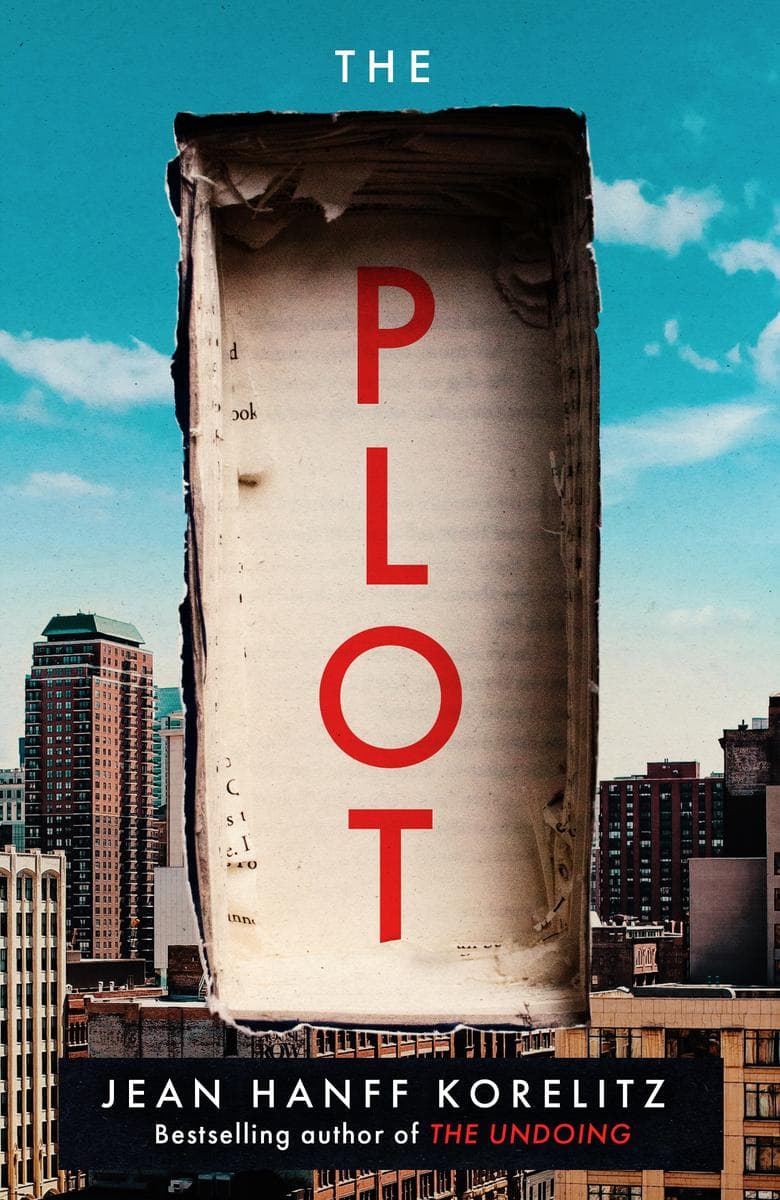
He hadn’t gone looking for this. He had upheld the honor of writers who listened to the ideas of other writers and then turned responsibly back to their own. He had absolutely not invited the brilliant spark his student had abandoned (okay, involuntarily abandoned) to come to him, but come it had and here it was: this urgent, shimmering thing, already tap, tapping in his head, already hounding him: the idea, the characters, the problem.
So what was Jake going to do about that?
A rhetorical question, obviously. He knew exactly what he was going to do about that.
<p>PART THREE</p><p>CHAPTER EIGHT</p><p>Crib Syndrome</p>Three years later, Jacob Finch Bonner, author of The Invention of Wonder and of the decidedly less obscure novel Crib (over two million copies in print and the current occupant of the number two spot on the New York Times hardcover list—after a solid nine months at number one), found himself on the stage of the S. Mark Taper Foundation Auditorium of the Seattle Symphony. The woman seated opposite him was a type he’d come to know well during his interminable book tour: a breathless, hand-flapping enthusiast who might never have read a novel before, she was so enraptured at encountering this particular one. She made Jake’s own job easier by virtue of the fact that she gushed incessantly and seldom formed a cogent question. Mainly all he was called upon to do was nod, thank her, and look out over the audience with a grateful, self-effacing smile.
This wasn’t his first trip to Seattle to promote the book, but the earlier visit had taken place during the first weeks of the tour as the country was just becoming aware of Crib, and the venues had been the usual ones for a not-yet-famous author: The Elliot Bay Book Company, a Barnes & Noble branch in Bellevue. To Jake, those were exciting enough. (There had been no book tour at all for The Invention of Wonder, and the personal request he’d made to read at the Barnes & Noble near his hometown on Long Island had yielded an audience of six, including his parents, his old English teacher, and the mother of his high school girlfriend, who must have spent the reading wondering what her daughter had ever seen in Jake.) What had been even more exciting about those first-round Seattle readings, and the hundreds like them all over the country, was that people actually came to them, people who were not his parents or high school teachers or otherwise somehow obligated to attend. The forty who’d shown up for that Elliott Bay reading, for example, or the twenty-five at the Bellevue Barnes & Noble, were complete strangers, and that was just astonishing. So astonishing, in fact, that it had taken a couple of months for the thrill to wear off.
It had worn off now.
That tour—technically the hardcover tour—had never really ended. As the book took off, more and more dates were added, increasingly for series where purchase of the book was part of the price of admission, and then the festivals started getting appended to the schedule: Miami, Texas, AWP, Bouchercon, Left Coast Crime (these last two, like so much else about the thriller genre he’d inadvertently entered, had heretofore been unfamiliar to him). In all, he’d barely stopped traveling since the book was first published, accompanied by a worshipful off-the-book-page profile in The New York Times, the kind that had once made him weak-kneed with envy. Then, after a few months of that, the novel’s paperback had been rushed into print when Oprah named it her October selection, and now Jake was returning to some of his earlier stops, but in venues even he had never conceived of.