Putin has a very personal approach to politics, and the real currency in Russia at the top level is not the ruble, nor even the dollar or the euro, but access to, and a relationship with, the boss. Putin is considered ruthless, and he certainly is to those he does not know. After they had half achieved independence under Yeltsin, the Chechens were subjugated by a vicious military campaign during Putin’s first term in office; up to a quarter of a million people may have died. The Ukrainians are suffering now because of his refusal to accept that their country has the right to determine its own fate, or even that it is a proper country at all. And ordinary Russians are seeing their pensions raided and their quality of life eroded to pay for his adventures abroad and the embezzlement by the elite.
But the paradox is that on an individual level, Putin, a man who doesn’t seem to make close friends easily, is actually very loyal to his own. This does not just mean turning a blind eye to their corruption – although he certainly does this to buy loyalty – it also means that when he has to sack or discipline those in his ‘gang’, he tends to make sure they get a soft landing.
When he first came to power, he sat down with eighteen of the country’s oligarchs, the business leaders who had become so politically powerful in the 1990s, and made it clear that, while he was not going to unpick the rigged privatisation deals which had made so many of them so fantastically rich, he would not accept any more interference in politics. As one aide to a senior banker later told me, ‘Everyone understood what was being offered: be quiet, be loyal, do what the Kremlin wants, or Putin’s guys would screw you good.’ Two of the most politically active and least willing to toe the new line, Boris Berezovsky and Vladimir Gusinsky, whether they jumped or were pushed, soon ended up in exile in London. A third, Mikhail Khodorkovsky, seemed not to get the memo, and continued funding liberal and anti-government causes. So, Putin’s guys screwed him good. In 2003, even though he was the richest man in Russia, he was arrested and charged with tax fraud. He was unlikely to have been completely clean – no one who made their money in 1990s Russia was – but he did nothing in business that his peers didn’t. However, his behaviour in the sphere of politics was another matter: he openly criticised government policy, most daringly complaining to Putin about governmental corruption at a televised meeting in the Kremlin. This made him an inconvenience, an embarrassment, an enemy, and a suitable example. His oil company, Yukos, was broken up and he was sentenced to nine years in prison in 2005, eventually being pardoned in 2013.
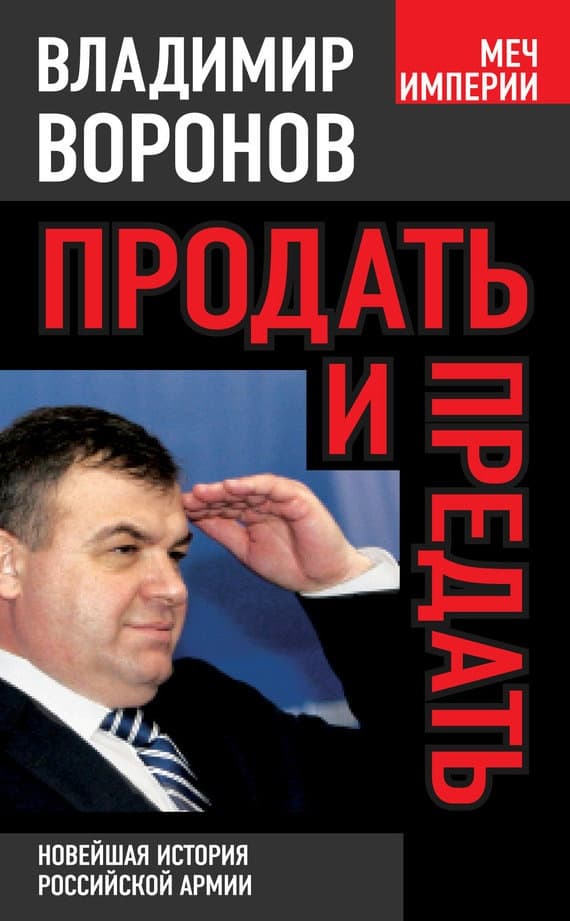
However, Khodorkovsky was never one of Putin’s guys. Those who are enjoy rather different fates. There are some who were never part of his inner clique of friends and confidants but who nonetheless kept their noses clean and did Putin’s bidding – for example, Anatoly Serdyukov, a former tax chief who was made minister of defence in 2007. He was hated by the generals, who called him the ‘furniture salesman’ because he had once run a furniture company. Above all, they despised him because he presided over a long-overdue programme of military reform that saw many of them sacked or nudged into early retirement. However, it didn’t matter what the top brass thought, because it was what Putin wanted of him. And nor did it matter that he was also accused of using his position to enrich himself and his friends, conspiring with Yevgeniya Vasilyeva, whom he had appointed to head the economic arm of the ministry, to sell off military property at bargain prices, in return for bribes. Nor even that he was said to have arranged for army engineers to build a road to a holiday resort owned by his brother-in-law. That’s just how today’s Russian officials operate.
What did matter was the fact that Vasilyeva had also become Serdyukov’s mistress. His father-in-law was former prime minister Viktor Zubkov, one of Putin’s inner circle, another colleague from the St Petersburg days, and someone he had relied on to intimidate his enemies through financial investigations. When an incensed Zubkov reached out to Putin, Serdyukov’s fate was sealed, and Vasilyeva was convicted and sent to a penal colony for five years. Serdyukov had to go, because crony trumps servant, but as tends to be the case with those Putin regards as having been loyal, he didn’t do badly in the end. Serdyukov was sacked, but his conviction was for a lesser change of negligence, and his sentence was commuted by presidential pardon. After a necessary period in the wilderness, he was appointed to a comfortable sinecure as industrial director of the Rostec state arms corporation.