Lord Venturi didn't think of wondering how she knew his first name. The champagne had been plentiful, and he saw no reason at the moment why any attractive woman of a certain age shouldn't know his name.
“Oh, there are one or two pockets of resistance left,” he said. “Nothing to concern you, Madam.”
“Bloody big pocket,” murmured Lord Selachii, into his moustache.
“They destroyed Big Mary, sir,” said the luckless messenger. “And they—”
“Major Mountjoy-Standfast can't outthink a bunch of gormless watchmen and civilians and some veterans with garden forks?” said Lord Venturi, who had no idea of how much damage a garden fork could do if hurled straight down from an elevation of twenty feet.
“That's just it, sir, they are veterans and they know all—”
“And the civilians? Unarmed civilians?” said Venturi.
The messenger, who was a sub-lieutenant and very nervous, couldn't find the right words to explain that “unarmed civilian” was stretching a point when it was a 200lb slaughterhouse man with a long hook in one hand and a flensing knife in the other. Young men who'd joined up for the uniform and a bed all to themselves did not expect that kind of treatment.
“Permission to speak freely, sir?” he tried.
“Very well!”
“The men haven't got the heart for it, sir. They'd kill a Klatchian in a wink, sir, but…well, some of the old soldiers are from the regiment, sir, and they're shouting down all kinds of stuff. A lot of the men come from down there, and it's not good for them. And what some of the old ladies shout, sir, well, I've never heard such language. Dolly Sisters was bad enough, sir, but this is a bit too much. Sorry, sir.”
Their lordships looked out of the window. There was half a regiment in the palace grounds, men who'd had nothing to do for several days but stand guard.
“Some backbone and a quick thrust,” said Selachii. “That's what's needed, by lo! Lance the boil! This is not a cavalry action, Venturi. And I'll take
“Selachii, we do have orders—”
“We have all kinds of orders,” said Selachii. “But we know where the enemy is, don't we? Aren't there enough guards here? How many guards does one fool need?”
“We can't just—” Lord Venturi began, but Madam said, “I'm sure Charles will see that no harm comes to his lordship,” and took his arm. “He does have his sword, after all…”
A few minutes later, Madam glanced out of the window and saw that the troops were quietly moving out.
She also noticed, after watching for some time, that the guard patrolling in the hall seemed to have vanished.
There were rules. When you had a Guild of Assassins, there had to be rules which everyone knew and which were never, ever broken.10
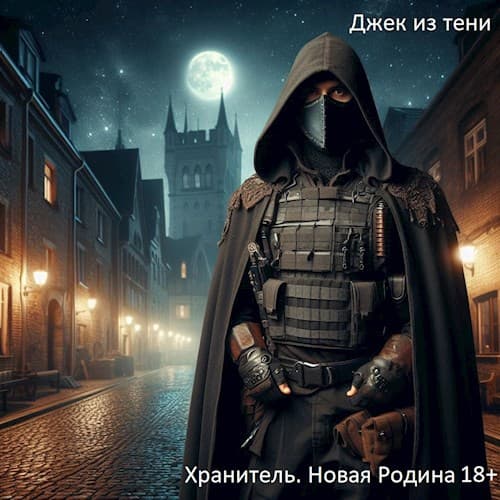
An Assassin, a real Assassin, had to look like one—black clothes, hood, boots and all. If they could wear any clothes, any disguise, then what could anyone do but spend all day sitting in a small room with a loaded crossbow pointed at the door?
And they couldn't kill a man incapable of defending himself (although a man worth more than AM$10,000 a year was considered automatically capable of defending himself or at least of employing people to do it for him).
And they had to give the target a chance.
But there was no helping some people. It was regrettable how many rulers of the city had been inhumed by the men in black because they didn't recognize a chance when they saw it, didn't know when they'd gone too far, didn't care that they'd made too many enemies, didn't read the signs, didn't know when to walk away after embezzling a moderate and acceptable amount of cash. They didn't realize it when the machine had stopped, when the world was ripe for change, when it was time, in fact, to spend more time with their family in case they ended up spending it with their ancestors.
Of course, the Guild didn't inhume their rulers on their own behalf. There was a rule about that, too. They were simply there when needed.
There was a tradition, once, far back in the past, called the King of the Bean. A special dish was served to all the men of the clan on a certain day of the year. It contained one small hard-baked bean, and whoever got the bean was, possibly after some dental attention, hailed as King. It was quite an inexpensive system and it worked well, probably because the clever little bald men who actually ran things and paid some attention to possible candidates were experts at palming a bean into the right bowl.
And while the crops ripened and the tribe thrived and the land was fertile the King thrived too. But when, in the fullness of time, crops failed and the ice came back and animals were inexplicably barren, the clever little bald men sharpened their long knives, which were mostly used for cutting mistletoe.
And on the due night, one of them went into his cave and carefully baked one small bean.
Of course, that was before people were civilized. These days, no one had to eat beans.