The system aimed to accommodate the aspirations of the ‘nationalities’, and to a large extent it succeeded. It ensured that a larger proportion of each group would get official jobs and that most of the subject population would be administered by people of their own kind. It also provided a stimulus to national self-expression in most forms of art. Furthermore, the loyalty of the provincial nationality elites was fostered by a series of institutional links which strengthened personal connections with Moscow. Not only the Party itself but professional, academic and artistic associations networked across the Union, promoting links between the great metropolis, Moscow, and the peripheries. Recognition by the centre became a point of pride, and access to the Union’s capital, where privilege shops gave access to goods unobtainable elsewhere, was much sought after.
Aspects of the nationalities policy showed that, though the Soviet regime, shaped in the crucible of pitiless warfare, had inflicted great cruelties and that dogmatism, dragooning and repression were fast becoming entrenched in its culture, the infant Union also possessed a kindlier and more constructive face. This was largely because the Bolsheviks had been constrained to co-opt proponents of the progressive agenda. Hence the government’s enlightened attitudes to women and minorities, its enthusiasm for literacy and education, and, in part, its campaigns against the obscurantism of the Church and all religions. It also encouraged talent — and never more so than when it found someone who conformed to a Soviet ideal and had been neglected by the old regime.
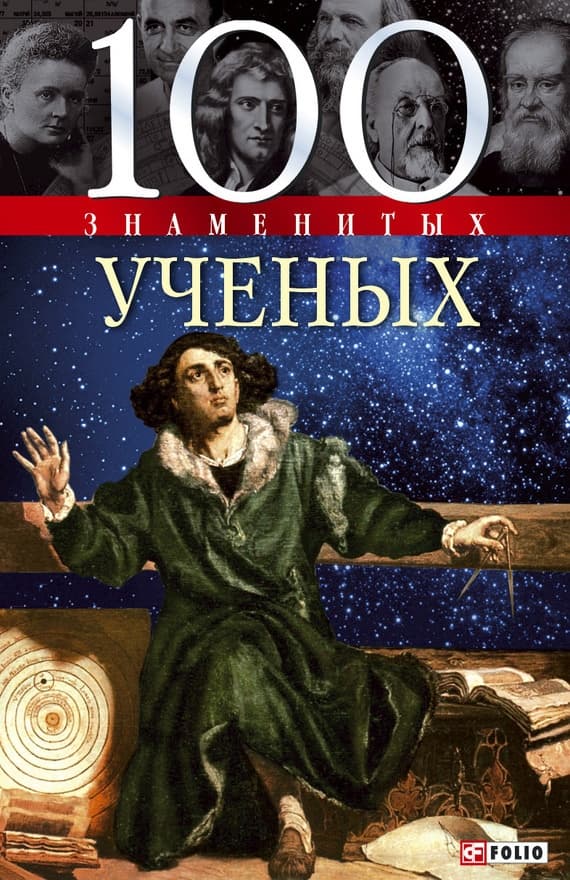
Konstantin Tsiolkovskii, for example, had good proletarian credentials. He came from mixed Russian, Polish and Tatar stock, was a modest schoolteacher in Kaluga, and was handicapped by deafness. He was also a genius in the field of aerodynamics and a visionary who helped make space travel possible. Ignored by the scientific establishment, he had built Russia’s first wind tunnel at his own expense, and in 1899 he had published a key paper on atmospheric pressure on surfaces, also at his own expense. Once the Soviet regime was in power, however, his research was funded, he was elected a member of the Academy of Sciences, and allotted a life pension. The physicist Kapitsa, the economist Kondratev, the writer Maxim Gorky and the composer Sergei Prokofiev were among other luminaries who shone in this early Soviet period.
The New Economic Policy stabilized a country careening out of control, and the basic indicators of demographic strength and economic growth flickered and began to rise. Indeed, the population in the period 1922—7 grew at the phenomenal rate of 2 per cent a year. This was chiefly due to a decline in the death rate. Winnowed by the hardships of the tragic years, the population had been growing hardier. 14 National income was also creeping up. In 1925—6 it reached 75.7 rubles per head of population — 75 per cent of what it had been in 1913. Yet, of a total population of 150 millions, almost 82 per cent lived and worked in the countryside. A brilliant future, Communist or not, could not be built on such a basis. In proportion to population, Russia’s national income was less than a fifth of Britain’s and less than an eighth of that of the United States. 15 And by 1928 a serious economic and social crisis was looming. It led the Party to resort to military methods again, and worse.
The crisis was linked to the onset of the world depression but stemmed from serious inadequacies in Soviet economic arrangements. Industry was failing to produce goods the peasants were interested in buying. The peasants therefore saved themselves the labour of sowing so much land for the next harvest. The result was a dearth of grain not only for export, but also for the cities and hence industry. The state reacted with what since the war had become a traditional remedy: requisitioning grain from the peasants. The recurring problem arose from a failure to match supply and demand, but there were more fundamental inadequacies in the management
The planned management of our national economy is one of the main aims. But planned management … requires good plans. In practice, when we draw up the plans we very often misunderstand the problems and opportunities involved. This is why our planning is so full of enthusiasm, why it wastes too much energy, why it is so isolated from economic policy in practice, and why it produces [unpleasant] surprises. 16
Idealism and enthusiasm by themselves could not direct the economy efficiently. Indeed, they sometimes combined to undermine it. Meanwhile the urban labour force needed for industry, though increasing, was still less than it had been in 1916. 17