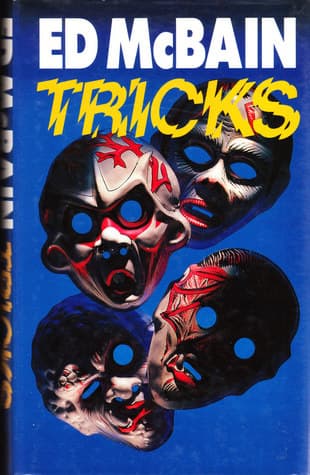
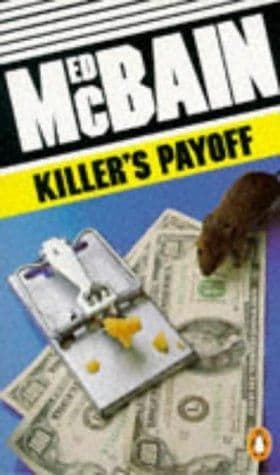
- Ed McBain
- 18+


SUMMARY:Lieutenant Pete Byrnes and his fellow cops at the 87th Precinct race against time to find Pepe Miranda, a killer and two-bit hero of the street gangs of the city. Reissue.
July.
Heat.
In the city, they are synonymous, they are identical, they mean one and the same thing. In the 87th Precinct, they strut the streets with a vengeance, these twin bitches who wear their bleached blond hair and their bright-red lipstick slashes, who sway on glittering rhinestone slippers, who flaunt their saffron silk. Heat and July, they are identical twins who were born to make you suffer.
The air is tangible. You can reach out to touch it. It is sticky and clinging, you can wrap it around you like a viscous overcoat. The asphalt in the gutters has turned to gum, and your heels clutch at it when you try to navigate the streets. The pavements glow with a flat off-white brilliance, contrasting with the running black of the gutter, creating an alternating pattern of shade and light that is dizzying. The sun sits low on a still sky, a sky as pale as faded dungarees. There is only a hint of blue in this sky for it has been washed out by the intensity of the sun, and there is a shimmer over everything, the shimmer of heat ready to explode in rain.
The buildings bear the heat with the solemnity of Orthodox Jews in long, black frock coats. They have known this heat. Some of them have withstood it for close to a century, and so their suffering is a silent one; they face the heat with the intolerant blankness of stoics.
Scrawled onto the pavement in white chalk are the words:
The buildings crowd the sidewalks and prepare neither for their redemption nor their perdition.
There is not much sky on this street.
There are places in the world where the sky is big, where it stretches from horizon to horizon like a gaudy blue tent, but such is not the case on this street. The sky here seems to have been wedged down over the uneven silhouette of the buildings, crammed into place because it would not fit properly, battered with a grimy fist until it tightly capped the street and contained the heat there.
The street is quiet.
It is only 8:40 in the morning, and it is Sunday.
There are unfluttering scraps of newspapers in the gutters; they share the gummy asphalt with empty tin cans and broken bottles and sticks ripped from orange crates. In the empty lot on one corner, there are the charred remains of bonfires, a torn and soiled crib mattress, the trailing white snakes of used condoms. The fire escapes are hung with the trivia of life: blankets, pillows, beer cases, potted plants, and here and there a guitar. A man sleeping on one of the fire escapes moves his arm, and it dangles down through the iron bars for a moment, swings idly, and then comes to a rest.
This is the only movement on the street.
The air is fetidly still. The heat is a self-contained, lifeless unit which does not stir and which discourages the motion of anything it embraces. It has baked itself into the brick fronts of the tenements, and the asphalt, and the pavements, and the sky. It has baked itself into these things and onto these things like orange enamel on copper.
Somewhere in the distance, the church bells toll, for this is Sunday morning, but even the bells ring qut on the air with a harsh flatness, a metallic unevenness that must force its way through layers and layers of heat. Beneath that, like a rushing counterpoint, the elevated train roars past two blocks south, and then the train sound dies, and the bell sound dissipates in the sticky silence of the air, and the street is still once more.
Two people will die on this street today.
The boy's name was Zip.
He was seventeen years old and he erupted from the mouth of the tenement like a hand-grenade explosion. He came onto the stoop lightly, and then almost danced down the steps. He looked up at the waking man on the fire escape, waved nonchalantly, and then glanced up the street. He was tall and thin, good-looking in a craggy way, with a light complexion and black hair which he wore in a high crown off his forehead. He was wearing tight black slacks and high-topped combat boots and a bright silk purple jacket with his name embroidered in yellow on the left breast.
He looked at his watch.
It was 8:45, and he noted the time and then nodded, as if he had correctly estimated the exact duration of each of his movements up to this moment, as if he and the universe were meshing gears correctly. He looked up the street again. There was an air of restless urgency about him, the air a business magnate wears when he is expecting to close a deal for the purchase of a new company. The attitude was curious on a seventeen-year-old. And yet, he looked at his watch again, a person captured by the intricacies of time, the mind of a fifty-year-old banker seemingly ensnared in the body of an adolescent.