For a few years during his internal evolution, Putin understood the danger of such an approach, but his desire to get re-elected for a third term – and the need to keep Medvedev in his place – made the perpetuation of the image of a Western ‘enemy’ inevitable. Putin’s speech to the Munich Conference on Security Policy in 2007 was aimed at alarming the West, and also the Russian people: ‘the enemy is at our gates’, was his message to the domestic audience, ‘This is no time for thinking about democracy.’ The seed fell on fertile ground. The 2008 war with Georgia was the litmus test of this. The annexation of Crimea in 2014 and the invasion of the rest of Ukraine in 2022 signalled the beginning of a hybrid war with the West. It is no coincidence that Putin, according to several sources, chose Kiev at the start of the past decade to proclaim to his entourage that a Third World War was now inevitable, and he made the fateful decision to embark on a grandiose rearmament programme. The Russian economy and Russian society are now predicated on this concept. Russian foreign policy has been reoriented towards the east. Putin, in the spirit of Alexander Nevsky, is ready to sacrifice Russia’s political independence in order to enlist China in opposing Western ideas. But there is a massive gap between the interests of the ruling criminal gang in the Kremlin and the interests of the country. The Russian people and Russia herself have no antagonistic conflicts with the West. There is competition and a desire to preserve our own identity, but there is a clear understanding that historically we belong to a common civilisation, and an acceptance and willingness to draw on it to define the vision of our future.
The problem is that Putin and his entourage are unable to accept this vision. Democratic values, human rights, transparency of business, compromises and the refusal to use force as a tool of coercion and competition – all this is not just ideologically unacceptable to them, it objectively jeopardises their power and therefore their existence. The current generation of Russians have a choice of what relationship we wish to build when Putin is gone. We must decide if we perpetuate the insane paradigm of the Cold War, the paradigm in which ‘the only good [Russian] bear is a dead bear’, or whether we find a way to live together; perhaps not even together, but at least in friendly proximity …
CHAPTER 14
MANAGED DEMOCRACY
People in the West are sometimes puzzled about the nature of power in Russia. There is a lack of clarity about how the political system works and whether Russia is a democracy. The Western media carry reports of votes and elections, opposition candidates and campaigns and debates; yet Vladimir Putin appears to go on and on, seemingly wielding power in the style of a tinpot dictator. Because of the confusion about these conflicting perceptions, it may be worth mentioning a few things that help to explain the reality behind the appearance.
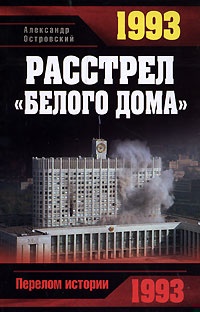
Boris Yeltsin retained and expanded the democratic institutions introduced by Mikhail Gorbachev, including broadly free elections and an (initially) independent parliament. The 1993 constitution declared Russia a democratic, federative, law-based state with a republican form of government. State power is divided among the legislative, executive and judicial branches. Diversity of ideologies and religions is sanctioned, and a state or compulsory ideology may not be adopted. The right to a multiparty political system is upheld. The content of laws must be approved by the public before they take effect, and they must be formulated in accordance with international law and principles. But the economic chaos of the 1990s led many Russians to lose faith in the free-market democracy Yeltsin had developed. He acknowledged this in his resignation speech, when he handed over the baton to Vladimir Putin in December 1999. As I touched on earlier, first indications were that the new man would continue to uphold the democratic values of his predecessor, as Putin pledged to preserve free and fair elections, freedom of speech, freedom of conscience, freedom of the media and private ownership rights.