An early sign of what Putin was actually planning came with a manifesto he published in 2000, titled Russia at the Turn of the Millennium. In it he pays lip service to democratic principles, but his warmest words are reserved for the personalised model of state power that he would go on to introduce in Russia. He describes the liberal reforms of the 1990s as a Western imposition that must be overthrown. ‘The experience of the 90s vividly shows that our country’s genuine renewal cannot be assured by an experimentation with models and schemes taken from foreign text-books. The mechanical copying of other nations’ experience will not guarantee success … Russia cannot become a version of, say, the US or Britain, where liberal values have deep historic traditions.’ Putin’s questioning of ‘liberal values’ was contrasted with his praise for statist autocracy: in place of individual rights, a strong state and centralised authority. ‘Our state and its institutions and structures have always played an exceptionally important role in the life of the country and its people … a strong state is not an anomaly to be got rid of. Quite the contrary, it is the source of order.’
To correct the mistakes of the ‘Western’ experiment, Putin said there would need to be a return to traditional ‘Russian’ values. Some of the values he listed evoked elements of Russia’s authoritarian past.
Patriotism: Patriotism is the source of the courage and strength of our people. If we lose patriotism and national pride and dignity, we will lose ourselves as a nation. Belief in the greatness of Russia: Russia was and will remain a great power.
Statism: The Russian people are alarmed by the weakening of state power. They look forward to the restoration of the guiding and regulating role of the state.
Collectivism: Cooperative forms of activity have always prevailed over individualism. The collectivist mindset has deep roots in Russian society. The majority of Russians believe that the support of the state is the key to improving their prospects, not individual effort and entrepreneurialism.
The New Russian Idea: The New Russian Idea will come about as an amalgamation of universal principles with traditional Russian values.
When I read Putin’s manifesto in 2000, I was struck by the similarity of his ‘Russian’ values to the founding principles of Alexander III, the most repressive of the later Romanovs, who decreed that the state must be built on Pravoslavie, Samoderzhavie, Narodnost – Orthodoxy, Autocracy and the Nation. Putin’s downplaying of individual enterprise and his insistence on the supremacy of the state appeared to me alarming and backward looking. Even the name he chose for his model of state power – the New Russian Idea – was redolent of old thinking. The ‘Russian Idea’ was first introduced to the West by the philosopher Vladimir Soloviev at the end of the nineteenth century to denote Slavophile anti-Westernism, and a belief in Russian cultural supremacy. The ‘Russian Idea’ was one of Russian exceptionalism, the conviction that Russia has been chosen to play a special role in the history of civilisation, with a unique identity that points her to a different path from the rest of the world, in opposition to the liberal, individualistic freedoms of Western Europe.
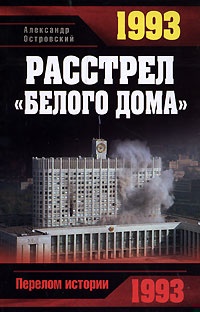
In Putin’s version of ‘The Russian Idea’, the powerful state is identified with a powerful leader; national unity is embodied in and represented by a single collective spokesperson: the president. His claim that the Yeltsin years had been an unwelcome aberration, and the experiment with Western-style government proof of Russia’s unsuitability to such a system, appealed to some sectors of public opinion, including those who recognised Putin’s message that Russia becomes ungovernable without a strong state to impose order. A ‘strong state’ might have been justified in the transitional period needed to build a free civil society, but a free civil society never got built. And Putin’s supporters gave ‘The Russian Idea’ a new, added dimension: the notion that only Vladimir Putin could guarantee stable governance was so widely repeated and promoted that, like Louis XIV, he came to believe l’état c’est moi – the state is me. When Putin’s chief of staff, Vyacheslav Volodin, said in 2014, ‘there is no Russia today if there is no Putin’, it was not a joke, but a consecration of the one-man state.