By rewriting history, Putin wishes to create a narrative of continuity between the eras of tsarism, communism and the present day, in which Russia appears as an imperial power, equalling and rivalling the West, exerting strength and influence across the globe. That would allow him to place his own imperial dreams in a historical context of heroic expansionism, a narrative attractive to the conservative elements of the Russian electorate and bolstered by the reinvention of the external enemy myth. In the past, it was the Mongols, Napoleon or Hitler; today it is once again the West that fills the role of menacing foe, in the face of which Russian society must forget its differences and unite behind its strongman leader.
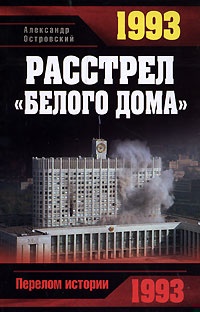
More recent times have also been rewritten. The 1990s experiment with market democracy is portrayed by Putin’s textbooks as a modern ‘Time of Troubles’, in which chaos, poverty and violence outweighed any benefits; while the era of communist rule is remembered for its subsidised prices, free housing and education, rather than the political repression, shortages of consumer goods and persecution of free speech. Deploring the ‘wild’ liberalism of the Yeltsin years allows Putin to make the leap to a blanket condemnation of democracy and pluralism, while the mirage of a glorious autocratic past helps him silence dissent, political opponents and critics.
When, in 2019, the European Parliament issued a resolution condemning the Kremlin for ‘whitewashing’ the facts of Soviet collaboration with the Nazis, Putin responded angrily. In a lengthy essay published on the 75th anniversary of the end of the Second World War, he defended the Molotov–Ribbentrop pact of 1939, in which Moscow and Berlin agreed they would invade and divide up Eastern Europe between them. The real guilt, Putin wrote, belongs to the Western powers who acquiesced to Hitler’s demands to annex the Czech Sudetenland. ‘Britain, as well as France … sought to direct the attention of the Nazis eastward so that Germany and the Soviet Union would inevitably clash and bleed each other white.’ As for Poland, the country that would suffer more than most from the secret protocol of the Nazi–Soviet pact, Putin argued that Warsaw was to blame for its own misfortune. ‘It is clear from examining the archive documents,’ he claimed, ‘that the Polish leadership of the time was colluding with Hitler … Maybe there were also some secret protocols in there, too.’
Most alarmingly, Putin rewrites the brutal Soviet invasion of the Baltic states, describing it as a peaceful unification of nations. ‘In autumn 1939, the Soviet Union, pursuing its strategic military and defensive goals, started the process of the incorporation of Latvia, Lithuania, and Estonia. Their accession to the USSR was implemented on a contractual basis, with the consent of the elected authorities.’ Such an explanation is completely false. Latvia, Lithuania and Estonia were subjected to a violent occupation that involved repression and mass murder. His contention that they joined the USSR ‘voluntarily’ and ‘with the consent of the elected authorities’ is a fiction that has alarmed other former Soviet states that the Kremlin might once again seek to annex.
For his domestic Russian audience, Putin’s manipulation of history has had the desired effect. In a 2012 poll asking Russians to nominate ‘the greatest ever Russian’, Stalin came top and he has retained his title ever since. In that initial poll, Vladimir Putin finished in fifth place, behind Peter the Great, Yuri Gagarin and Alexander Pushkin; but by 2017, he had risen to second, only a few percentage points behind the man he has striven so hard to rehabilitate and, perhaps, imitate.
CHAPTER 17
STOP THINKING YOU CAN BE SAFE WITH THE BEAR
While in power, Donald Trump used the language of populism to pledge to ‘make America great again’. Vladimir Putin continues to use the same rhetoric today. Both of them have stirred up resentment among their own population, insisting that their nation has somehow been demeaned and diminished, while promising a return to what they see as its rightful national glory.